Thursday

Investment Property

Investing in property almost certainly generate a profit, considering the price of properties in Indonesia continues to increase. This is one investment instrument that is in great demand today.

Can not be denied, indeed. In the worst situations, like when the monetary crisis in 1998, property prices in Indonesia moves stagnant, not decreasing. No wonder, if eventually a lot of people vying targeting ideal property, whether occupied or for investment.


Keen to see growth in the area around the reference view one of the high-low value of investments in one region. Cibubur, for example, which continues to grow, both in terms of facilities and infrastructure. Now being built several access roads to unravel congestion on roads Transyogi.

Completeness of facilities and high accessibility will increase the investment value of an area. Similarly, in Cibubur, which on average increased 12 percent per year, even (in some particular location) reached 30 percent per year, as said by Liana, Sales and Promotion Section Head City Tours.

Credibility developers also play a role. Nothing wrong view projects ever handled a previous developer and ask for a master plan for housing the center you seek.

Should realize, more full of amenities, the higher the perceived comfort of the occupants, the higher the increase in value of investments. This is also done since the first time the City Tour in Cibubur attend and be a pioneer in the area of ​​housing thematic concept.

Not just a dwelling that has a quality educational facilities, sports, and commercial sectors, the City Tour also known as a place of recreation for residents and surrounding Cibubur to Fantasy Island and Tourism Village.

Door of City Tours is still wide open for those who want to enjoy living in a place that combines harmony housing, education, recreation, and sport by launching the second phase of West Covina, Coatesville Extension, and the Concordia office. This latest project featuring a minimalist style that combined with the colonial and art deco design so it looks unique and chic.

Year 2012 is in sight, since now there's nothing wrong view of the right investment for your future. How?

Bluetooth's amazing makeover

A new version of the wireless technology will soon allow consumers to beam photos from cameras and use their cell phone to make purchases, reports Business 2.0 Magazine.

By Michal Lev-Ram, Business 2.0 Magazine writer-reporter

(Business 2.0 Magazine) -- There are a billion Bluetooth-enabled devices in the world -- cell phones, headsets, cameras, keyboards, printers. Another 13 million of them are being sold every week.

But that's chump change compared with the growth that analysts expect to see once a new version of the short-range wireless technology makes its way into products later this year.

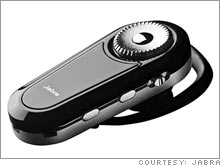
jabra.03.jpg
SOUND SOLUTION: The updated Bluetooth standard also means easier pairing with headsets like this one from Jabra.
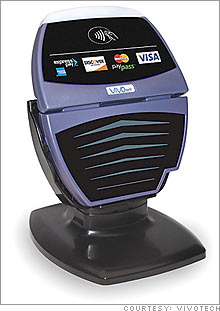
vivotech_bluetooth.03.jpg
ON THE MONEY: The new Bluetooth lets cell phones make payments via special readers at cash registers.
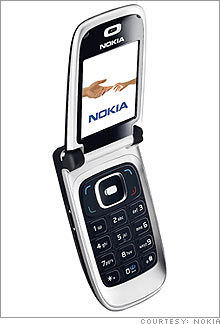
nokia_6131.03.jpg
THE BLUE YONDER: Nokia's 6131 NFC, coming soon to the States, will be one of the first handsets to feature Bluetooth 2.1.
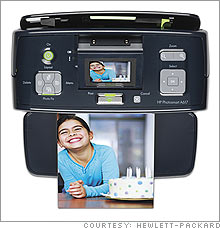
hp_printer.03.jpg
CLEAR PICTURE: Printers like this HP model will seamlessly pump out snaps from your phone.

Here's why: Pairing up Bluetooth devices is a laborious process that requires as many as 15 steps.

"The most significant challenge that Bluetooth has faced is making the technology more usable, especially when it comes to setting up connections," says Stuart Carlaw, an analyst with New York-based ABI Research. "There is no doubt that there are more viable business models for the technology. They just need to be better supported at the most difficult point" in the user's experience.

That should happen this fall, when the first Bluetooth upgrade in three years, Bluetooth 2.1, starts shipping.

Devices will be paired in as few as three clicks. Encrypted data transfer means no need for passwords. And lower power consumption means that Bluetooth 2.1 devices will have as much as five times the battery life of their predecessors.

All of which means that mass-market Bluetooth use is expected to expand far beyond the cyborg-style phone headset.

Users will be able to easily beam photos from cameras to printers or digital picture frames. Wireless keyboards, mice, and videogame controllers will get a boost too. Bluetooth 2.1 will be integrated with near field communication, or NFC, a standard for mobile payments, so consumers will have more opportunities to pay with their phones.

Companies like Jabra, Motorola (Charts, Fortune 500), and Plantronics (Charts) are developing Bluetooth 2.1 gadgets that should be out in time for the holiday season. The Bluetooth Special Interest Group -- a consortium backed by Intel (Charts, Fortune 500), Microsoft (Charts, Fortune 500), and Nokia (Charts) -- says the number of Bluetooth devices in the world should double to 2 billion by 2010.

"Clearly, one of the goals of the new specification is to drive use of the technology and help our members sell more products," says Kevin Keating, senior marketing manager at the Bluetooth SIG.

Sales of Bluetooth headsets alone, now at $8 billion, are expected to hit $14 billion within three years -- aided by an increasing number of bans on driving while talking on handsets. Such bans will go into effect in states like California and Washington by next year, creating millions of potential new headset customers.

"So far, the pairing aspect has been a barrier to entry compared with headsets that you plug into the phone," says Peter Hartmann, global product manager at headset maker Jabra. "Now it will be much easier for first-time users."

In 2008, Bluetooth 2.1 will itself be replaced by Bluetooth 3.0, code-named Seattle. That version is expected to integrate ultra-wideband technology, meaning Bluetooth that can handle the transfer of much larger amounts of data: Seattle should be a whopping 228 times faster than its predecessor.

Bluetooth's supporters expect that upgrade to have a major impact in the entertainment and consumer electronics industries, since it will enable users to transfer video between TVs and cell phones.

Even Hollywood is going blue

Tuesday

Nokia, InterDigital claim patent case victory

HELSINKI/LONDON (Reuters) - Nokia (NOK1V.HE) and wireless technology firm InterDigital (IDCC.O) each declared victory in a court decision on Friday over patents related to the UMTS third-generation (3G) mobile phone standard.

A London High Court ruled in favor of Nokia, the world's largest mobile-phone maker, that most of the patents in the case are not essential for mobile phone operators wishing to comply with the 3G standard, as claimed by InterDigital.

The court did rule that one patent relating to power control in mobile handsets was essential to the 3G standard. The validity of that patent may be considered at a later hearing and Nokia could be found to have infringed it.

Shares of InterDigital rose $2.32, or 11.41 percent, to $22.66 on the Nasdaq after the ruling. Nokia shares closed up 4 percent in European trade.

Both sides said they were happy about the court's ruling regarding patents related to power controls that increase capacity of mobile base stations and improve signal quality.

"The result is an extremely favorable outcome for Nokia and other industry participants," Nokia said in a statement.

InterDigital said in a statement it was pleased with the outcome and that they believe this is the first ruling by any court of law finding any patent to be essential to the 3G standard.

Nokia filed a complaint in July 2005 asking the High Court to declare that 31 of InterDigital's European patents were not essential to the UMTS standard, saying the it was proactively defending itself from potential infringement suits in Europe by InterDigital.

InterDigital filed a complaint with the U.S. International Trade Commission in August saying Nokia was engaged in unfair trade practice involving two InterDigital patents related to certain 3G handsets and components.

InterDigital also filed a complaint against Samsung Electronics (005930.KS) and certain of its affiliates with the Commission in March, alleging patent infringements.

InterDigital said in October the International Trade Commission had consolidated proceedings in the two cases.

(Reporting by Sami Torma in Helsinki, Roger Pearson in London and Daisuke Wakabayashi in Seattle; Editing by Quentin Bryar, Leslie Gevirtz)

Monday

Mouse dengan Tombol Angka

Mouse bikinan Adesso yang menyasar pengguna laptop ini sangat unik. Diberi nama AKP-170 atau 19 Key USB Numeric Keypad and Optical Mouse, desainnya sangat inovatif karena dilengkapi dengan tombol numerik built-in di bagian atasnya. Tambahan ini dimaksudkan untuk menggantikan fungsi keypad angka yang lazimnya tidak disediakan di mayoritas keyboard notebook. Jadi jika Anda butuh mengetik angka, tidak perlu lagi melepaskan tangan yang sedang menggenggam mouse ke keyboard. Langsung saja ketik dari mouse.

Supaya tidak terpencet tanpa sengaja ketika fungsi mouse-nya sedang dipakai, si tombol numerik dilindungi oleh casing plastik transparan. Karena ia mengadopsi USB Plug-and-Play, pengguna tidak perlu menginstal driver atau software tambahan apapun. Mouse ini juga kompatibel dengan sebagian besar sistem operasi Microsoft seperti Vista, XP, 2000, ME, dan 98.

Sebagai mouse optikal yang beresolusi 1000 DPI, AKP-170 menawarkan kinerja yang mulus dan akurat. Scrolling wheel-nya terasa nyaman digunakan menjelajah internet. Tombol tambahannya juga enak dipencet, seperti halnya keypad pada notebook. Jika Anda kebetulan hobi ngegame di laptop, keberadaan keypad numerik ini mungkin lebih disukai karena Anda bisa bermain menggunakan tombol angka di mouse saja daripada di keyboard yang lebih merepotkan.

Berapa harganya? "Hanya" 29,99USD saja, kok.


http://www.kompas.com/portal/infotekno/view.cfm?p=2007.12.11091343

Sunday

Mobile Computing: 3G, The Newest Wireless Technology

Feature: FAQ--What Are 3G Networks?
Given all the hype its recent U.S. introduction has received, 3G, a high-speed wireless data and voice network technology, seems reminiscent of 3D, the headache-inducing 1950s movie gimmick that had the masses peering at Godzilla through geeky glasses.
But what's behind the 3G hype? What exactly are 3G networks, and why should we care? Here's the scoop.

Phoning It In
The term 3G is shorthand for the third generation of wireless network technology. This technology is also sometimes referred to as the Universal Mobile Telecommunications System, or UMTS. According to proponents, "always-on" 3G networks will enable you to do all sorts of sci-fi things not possible before.
With 3G, mobile phones, handheld devices, and notebooks with 3G-compatible modems can easily handle high-speed multimedia content and serve as all-in-one communication, entertainment, and information devices, the promise goes. You'll be able to hold a videoconference with your coworkers while simultaneously surfing the Web--on your mobile phone. E-mail messages with file attachments will instantly download to your PDA or notebook. One of my favorite claims is that you'll be able to pull up to an automated car wash, activate the sudsing with your 3G phone, and have the charge added to your phone bill, according to 3GNewsroom.com.
Who knows? In the near future, actors who are routinely accused of phoning in performances may do exactly that.

From First to Third
The first generation of wireless networks, known as 1G, was a basic analog voice phone service without data capability.
With second-generation networks, or 2G, wireless technology progressed from analog to digital. These networks are still the most prevalent standard in use today. There are three main 2G network standards: CDMA (Code Division Multiple Access), GSM (Global System for Mobile Communications), and TDMA (Time Division Multiple Access). Each type has its own characteristics and features. For instance, GSM networks are global, and the mobile devices connecting to them can be used in the United States and abroad.
But 2G networks were primarily intended for digital voice services. Under ideal circumstances, 2G networks are painfully slow at sending data, reaching 10 to 19 kilobits per second, which is much less than half the speed of a traditional 56-kbps dial-up modem. And unless they've been especially optimized, most Web pages accessed from a 2G network inch across a handheld screen, which makes surfing the Web on a 2G wireless device as efficient as running underwater. To date, network service providers have had a difficult time luring the masses onto the wireless Web.
A few network providers introduced an interim standard, 2.5G technology, that can handle speeds between 56 and 144 kbps. But for several years, the big push has been toward 3G, which promises data transfer rates of 144 kbps to 2 megabits per second, and an always-on connection.
The 3G technology primarily consists of two standards, WCDMA (Wideband CDMA) and CDMA2000. With fewer competing standards, eventually 3G service should be more widely available than 2G networks have been, and roaming will be far easier, advocates say.

Beyond the Hype
The past few months have seen the first 3G networks arrive in the U.S. from such providers as Verizon Wireless, AT&T Wireless, and Sprint. So far, despite its improvements over 2G technology, 3G hasn't fully lived up to its promise. Top data transfer speeds of 2 mbps won't be available for another year or two, and early 3G network services are more likely to be 144 kbps or less.
For instance, in PC World's test of Verizon Wireless's 3G network using a notebook, average speeds in downtown San Francisco and Boston were 60 kbps and 70 kbps, respectively. Though the network's current top speed is billed as 144 kbps, average speeds are 40 to 70 kbps, depending on location, device, and network traffic.
Similarly, AT&T Wireless's 3G service has a theoretical top speed of about 115 kbps. But in our tests in Seattle on a notebook, speeds were about 38 kbps.
In addition, 3G networks aren't nearly as prevalent geographically as 2G networks, so coverage can be spotty. And service plans are often expensive and confusingly structured. Users of the Sprint PCS Vision network, for instance, are billed according to the amount of data downloaded, which can be difficult to estimate and control.
Despite 3G's current limitations, our testers concluded that the new networks are worth the price premium for mobile business users who need frequent access to e-mail and the Internet. But don't expect to use your cell phone to have your car washed just yet.
For more information on 3G networks, see the following PCWorld.com articles:
• "First 3G Networks Won't Be Fancy"
• "Samsung Shows Off Two New Palm-Based Phones"
• "Calling on Sprint's New 3G Network"
• "Connect Fast with 3G Nets"

Saturday

UMTS (Universal Mobile Telecommunications System)

HSUPA (High Speed Uplink Packet Access)
HSDPA (High Speed Downlink Packet Access)
UMTS (Universal Mobile Telecommunications System) Quick Links

Overview
CDMA2000 1xEV-DO
UMTS/GPRS
CDMA2000 1X


What is HSDPA/HSUPA?
High Speed Downlink Packet Access (HSDPA), sometimes referred to as a 3.5G technology provides an evolutionary path for UMTS networks. As an evolution of the W-CDMA standard, it is designed to provide downlink speeds up to 14.4Mbps. Uplink speeds are also increased to a possible 384 kbps versus 128kbps with UMTS. Reduced latency is a another key benefit, helping to improve round trip time for applications.

High Speed Uplink Packet Access (HSUPA), is also a 3.5G technology. It will provide data upload speeds up to 5.76Mbps.

What is UMTS/WCDMA?
Universal Mobile Telecommunications System (UMTS) -- also known as Wideband Code Division Multiple Access (W-CDMA) -- is an international 3G standard established by the International Telecommunications Union (ITU). It is an advanced and efficient wireless technology being introduced worldwide that uses DSSS, and both Frequency Division (FDD) and Time Division Duplexing (TDD), depending on the frequency assignment.

As a spread-spectrum technology, UMTS is designed to support the 3G evolution needs of Global System for Mobile Communications (GSM), and other, wireless network operators. GSM, the most widely used cellular access technology with over one billion users, is available worldwide.

Peak data rates of up to 384 kbps can be achieved depending upon use and the network construction. UMTS radio technology is an evolution of CDMA technology first introduced to the market in the mid 1990�s. UMTS/WCDMA is under the auspices of the 3GPP, the Third Generation Partnership Program, a consortium of 437 operators and vendors worldwide.
Features Benefits
Speed
Uplink speed to 384 kbps on UMTS, 53.6 on GPRS, and 14.4 on GSM
Bands Asia & Europe:
UMTS: 2100 MHz
GSM/GPRS: 900 & 1800 MHz
North America:
UMTS: 800 & 1900 MHz
GSM/GPRS: 800 & 1900 MHz
Applications Access to email, the Internet, corporate databases, fax, voice, two-way short message service (SMS), multimedia messaging service (MMS), Images, video, sound, music, data intensive attachments, web broadcasts, and video conferencing
Global Access UMTS is fully backward compatible with GSM and GPRS networks. Customers can roam between 195 countries on over 500 GSM, GPRS and UMTS networks worldwide providing access virtually anywhere worldwide. Users can move between GSM, GPRS and UMTS coverage areas without dropping connections or losing access to their network.
Always On Connectivity Users are always connected, always on-line. Once a connection has been made, information can be sent and received without delay.
Security Extensive authentication and encryption algorithms make it virtually impossible for unauthorized users to capture and decipher messages. The UMTS Subscriber Identity Module (USIM) card stores authentication information and security data to enable applications such as mobile banking, prepaid service activation and control, directory services and information services.

Benefits to users
Global Coverage Increase productivity and stay connected to customers and colleagues while they are working away from their office
Speeds up to 384kbps Enables wireless broadband data access to email, the Internet, corporate networks, high quality web broadcasts, streaming video and audio, and rapid downloads of large attachments.
Dial Up and ISDN Alternative Gives customers more choices
LAN vs. WAN While WiFi gives "hot spot" coverage and WiMAX extends this coverage as a broadband wireless access solution to metropolitan area networks, 3G/UMTS offers wide area coverage with full mobility, integral security and automatic roaming to meet the needs of business users and consumers alike

Benefits to Operators
60% fewer sites for the voice; 40% fewer for data access Improved network efficiency and higher capacity
Data speeds up to 384 kbps - UMTS Enhance competitive position by offering customers cost effective wireless broadband alternative to Dial Up, ISDN and areas without DSL coverage.
Cost of only 1 - 1.5 times GSM Ten times the traffic capacity compared to GSM
3GPP Compliant Compatibility with a variety of carriers and equipment manufacturers is virtually guaranteed
Compatible to GSM/GPRS UMTS builds on existing investments in GSM with over 1 billion users globally used by more than 70 percent of the world's wireless customers. Easier to deploy international roaming with GSM/GPRS/UMTS networks internationally
Rapid UMTS expansion 3G/UMTS networks are already deployed by more than 30 operators in almost 20 countries with dozens more in trial or pre-launch
Application Development Provides new opportunities for wireless developers to bring new applications to market more quickly

Availability

Globally UMTS Coverage


For More Information: UMTS Forum